
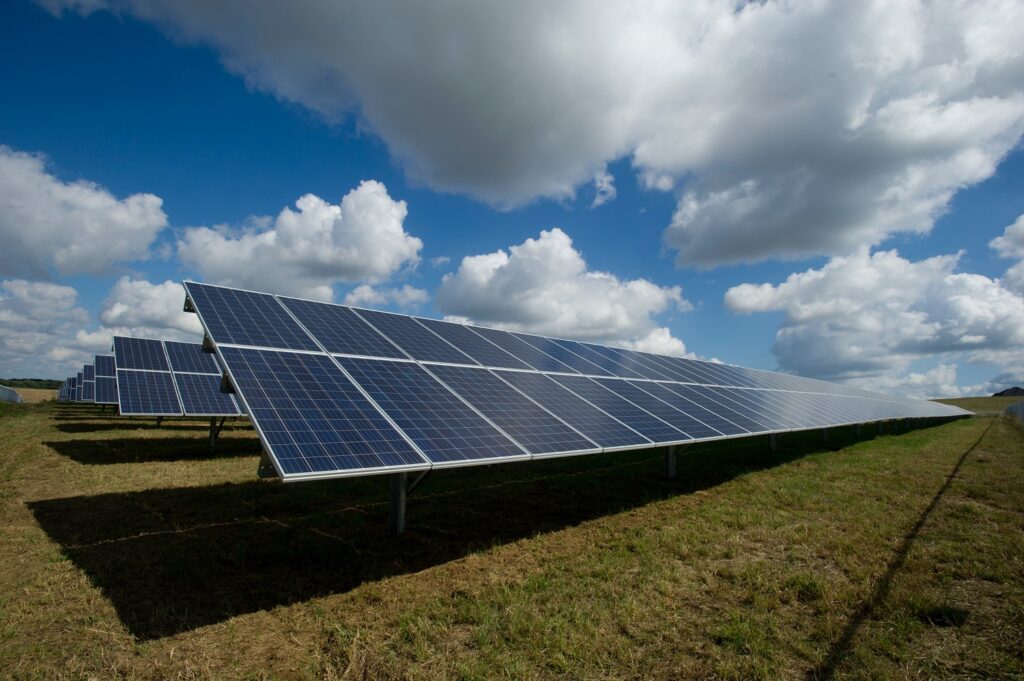
India isn’t experimenting with solar anymore. It’s scaling it at a national level, and that shift is already visible across cities and smaller towns. Rooftop systems are no longer limited to early adopters. They’re becoming part of how regular homes manage electricity.
The primary barrier for most homeowners remains the upfront investment. To address this, the government has introduced structured subsidy programs that directly lower installation costs and support wider adoption.
While these incentives are well-established, the way they are structured across schemes and states can create confusion. Understanding eligibility, applicable benefits, and the process is key to making an informed decision.
This article explains how solar panel subsidies work in India, the major government schemes in place, who qualifies, and what homeowners can expect in terms of financial impact.
What is a solar panel government subsidy?
A government solar subsidy is financial assistance that reduces the upfront cost of installing rooftop solar systems. In India, this mainly comes through the Central Financial Assistance (CFA) under national programs.
For a typical residential setup, the government offers a fixed amount per kilowatt (kW). For instance, systems up to 3 kW receive higher support per unit compared to larger systems. The structure feels a bit tiered, but it does make smaller installations more accessible.
The subsidy on solar panel installations is typically credited after the system has been installed and inspected. This means the initial investment still needs to be arranged upfront, which often comes as an unexpected detail for many homeowners.
Who all can avail of a government solar panel subsidy?
Understanding who qualifies for a subsidy on solar panels is important before starting the installation process. Eligibility depends on the type of property and the applicant category.
- Residential homeowners are the primary beneficiaries.
- Housing societies can apply under the group housing provisions.
- Individual house owners installing grid connected systems qualify.
- Farmers have separate schemes under PM KUSUM.
Commercial and industrial setups? They don’t get central subsidies. That’s a common misunderstanding.
If you’re planning solar panels for a house, the support is quite meaningful, especially when combined with state-level incentives.
Why is the government offering a solar rooftop subsidy?
At a policy level, the intent is clear: reduce dependence on conventional energy sources and increase decentralized power generation.
But beyond policy language, there’s a practical angle. Rooftop solar reduces load on distribution companies (DISCOMs). It also cuts transmission losses, which are a bigger issue than most people realize.
And frankly, India’s energy demand is only going up. Encouraging individuals to generate their own electricity helps balance that pressure.
How are government subsidies for solar panels promoting renewable energy?
Subsidies act as a catalyst for adoption. Without them, the shift toward solar would continue, but at a slower pace.
Here’s what they change:
- They shorten the payback period
- They make solar viable for middle-income households
- They encourage local manufacturing and installation ecosystems
The impact is already visible. As demand grows, competition increases, and pricing gradually becomes more accessible for homeowners.
Over time, the need for solar energy subsidies may reduce as the market matures. For now, though, these incentives continue to play a key role in making solar a practical choice for a wider segment of households.
Top solar rooftop subsidies in India to maximize your energy savings
PM Surya Ghar Muft Bijli Yojana
This is currently one of the most widely discussed initiatives in the residential solar space. The objective is clear: enable households to generate their own electricity and reduce dependence on grid power.
To support this shift, the scheme offers direct financial assistance while also simplifying the overall process, making it easier for homeowners to adopt rooftop solar without unnecessary delays.
Grid Connected Rooftop Solar Program
This has been the backbone of India’s rooftop solar push.
Under this program:
- Subsidies are provided for systems up to 10 kW
- The structure favors smaller installations
- Funds are routed through DISCOMs
For many households, this is the entry point into understanding financial benefits available for solar installations.
PM – KUSUM
This scheme is primarily focused on rural and agricultural energy needs, with an emphasis on reducing dependence on conventional power sources.
Three key components
- Component A
Supports the installation of solar power plants on barren or unused land, creating an additional source of income for landowners. - Component B
Helps farmers install standalone solar-powered pumps, reducing reliance on grid electricity or diesel. - Component C
Enables the solarization of existing grid-connected pumps, allowing farmers to use solar energy while staying connected to the grid.
Overall, the scheme is less focused on rooftops and more on building energy independence within the agricultural sector.
Production Linked Incentive (PLI) Scheme
This scheme does not directly reduce installation costs for consumers. Instead, it focuses on strengthening domestic manufacturing capacity.
The objective is to support solar panel manufacturers in India to reduce the country’s reliance on imports. Over time, this contributes to a more stable supply chain and better price consistency in the market.
Delhi Solar Energy Policy
Delhi has taken a slightly different approach by combining central subsidies with generation-based incentives.
Instead of focusing solely on reducing installation costs, the policy allows users to earn based on the electricity their systems generate. This creates an additional financial benefit beyond initial savings.
It presents an interesting model. Its effectiveness at a larger, nationwide scale is still being evaluated.
Comparing government solar panel subsidies across states in India
State-level incentives vary more than most people expect. Some states actively top up central subsidies, while others keep them minimal.
| State | Central Govt Subsidy (CFA) | State Subsidy Benefits | Total Subsidy Benefit | Features |
| Maharashtra | ₹30,000/kW for first 2 kW, ₹18,000/kW for 3rd kW (up to 3 kW) | ₹25,000 to ₹60,000 top-up based on system size | Up to ₹1.3 lakh for 3 kW systems | State subsidy maxes at 3 kW; group housing societies get 20% CFA up to 500 kW |
| Delhi | ₹30,000/kW for the first 3 kW | No additional state subsidy | ₹90,000 for 3 kW systems | Subsidy capped at 3 kW |
| Karnataka | ₹30,000/kW for the first 3 kW | Additional ₹10,000 per kW (up to 3 kW) | Up to ₹1.2 lakh for 3 kW | State subsidy adds a noticeable boost |
| Tamil Nadu | ₹30,000/kW for the first 3 kW | No fixed state subsidy; varies regionally | ₹90,000 for 3 kW systems | Incentives routed through local DISCOMs |
| Rajasthan | ₹30,000/kW for the first 3 kW | Varies; some districts offer additional incentives | Around ₹90,000 or more | Strong state support in select areas |
If you’re evaluating the subsidy on solar panels in Rajasthan, it’s worth checking local DISCOM policies, not just central guidelines.
- Other states also offer region-specific benefits:
- Subsidy on solar panels in Gujarat tends to be consistent and well-implemented
- Subsidy on solar panels in Punjab often includes additional state incentives
- Subsidy on solar panels in MP varies, but supports smaller systems well
- Subsidy on solar panels in Uttarakhand encourages adoption in remote areas
The pace of adoption varies by state. That is the most realistic way to assess it.
How solar rooftop subsidies in India impact citizens and energy costs
1. Reduced upfront costs
This is the most immediate and visible impact. A system that may initially seem expensive becomes far more manageable once financial support is applied. Solar energy subsidies can significantly lower the initial investment, making the decision easier for many homeowners.
2. Lower monthly electricity bills
Once the system is operational, it begins offsetting your grid consumption. In some cases, households see a sharp drop in their electricity bills, while others experience steady savings over time based on their usage patterns.
3. Income generation potential
With net metering in place, excess electricity can be exported back to the grid. While it may not create a major income stream, it does contribute to faster cost recovery and improves overall returns.
4. Enhanced energy security & reliability
Power interruptions are still common in many regions. A solar system, especially when paired with backup options, reduces dependence on the grid and adds a layer of reliability to your home’s energy supply.
There’s a certain comfort in knowing you’re not entirely reliant on the grid.
5. Environmental & social benefits
A lower carbon footprint is the most direct outcome. At the same time, distributed energy generation helps reduce pressure on centralized infrastructure, which supports a more balanced energy system overall.
6. Broader access across economic groups
Financial support opens the door for more households to consider solar. For many, it shifts the decision from being delayed to becoming immediately viable. Solar incentives play a steady role in widening access.
7. Increased adoption & cost decline
As more households adopt solar, market competition grows, and pricing becomes more stable. This creates a cycle in which increased demand improves affordability, which in turn drives further adoption.
8. Citizen Solar Advantage
Choosing the right installation partner matters as much as the subsidy itself.
Citizen Solar brings:
- End-to-end support from consultation to installation
- High-efficiency modules and inverters
- Strong presence across India
- Guidance through subsidy applications and approvals
Many homeowners begin with some confusion about the solar panel subsidy, which is understandable given the way the process is structured. It isn’t always immediately clear how eligibility, approvals, and disbursement work.
Having an experienced partner to guide you through each step can make the entire process more straightforward to manage.
Bottom Line
Solar subsidies in India are structured, active, and continuing to evolve. They do not eliminate the cost entirely, but they make solar a far more practical option for households considering the shift.
For those already exploring solar, the current ecosystem is more supportive than it was just a few years ago. Policies and incentives are subject to change, and their long-term direction is not always predictable.
At present, the combination of central and state-level support lowers the barrier to entry and makes the transition to solar more accessible than before.
Ready to switch to solar?
At Citizen Solar, we help you move from planning to installation without unnecessary delays. Our team provides clear guidance on eligibility, documentation, and system sizing, all in one place.
Call us today at +91 8000111222 to speak with our team that understands both the technical side and the subsidy process. Start with a consultation and take the first step toward reducing your electricity costs.
FAQs
Why does the Government give Solar Subsidies?
To encourage renewable energy adoption, reduce dependence on fossil fuels, and lower the burden on power infrastructure.
Is there any subsidy on solar panels in India?
Yes, residential users can avail themselves of central subsidies under national programs.
How can I get a subsidy for solar panels in Haryana?
Apply through the national solar portal or your local DISCOM. Installation must be done by an approved vendor.
How can I apply for solar incentives in India?
Register on the official portal, select a vendor, install the system, and submit documents for verification.
How can I apply for solar incentives in Uttar Pradesh?
Follow the same central process, along with any state-specific guidelines issued by DISCOMs.
Can a subsidy be provided on the renewal of solar panels?
No, subsidies are typically available only for new installations.
How much subsidy do I get for installing solar panels?
It depends on system size. Up to 3 kW gets higher per kW support.
Is a subsidy available on rooftop solar panels in Maharashtra?
Yes, both central and additional state subsidies are available.
Can commercial and industrial consumers avail themselves of the central rooftop solar subsidy?
No, central subsidies are limited to residential users.
If I already installed a rooftop system without a subsidy, can I apply later and claim the subsidy?
No, subsidies must be applied for before installation and through approved channels.