
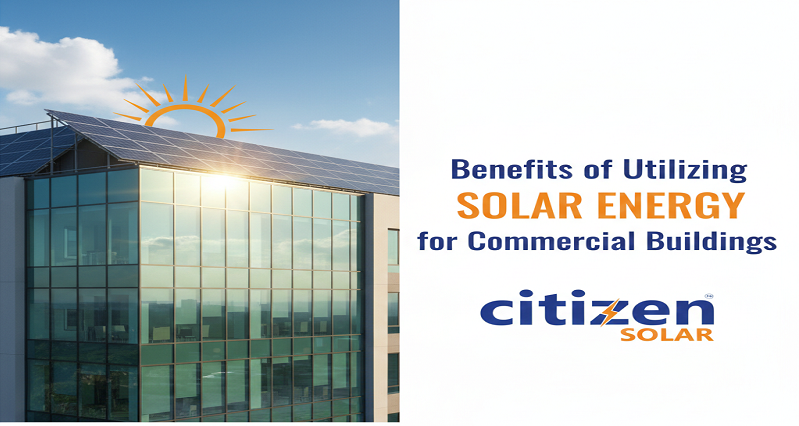
Solar energy for commercial buildings means generating electricity on-site using photovoltaic (PV) panels, usually installed on the rooftop, parking shed, or an unused terrace area, and using that power to run your day-to-day operations.
In simple terms, a commercial solar panel converts sunlight into usable electricity, so your building depends less on the grid during working hours (when your consumption is usually highest).
For Indian businesses dealing with rising tariffs, peak-hour charges, and unpredictable outages, this shift can feel like a long-term “fixed rent” for electricity.
Key Benefits of Utilizing Solar Energy for Commercial Buildings
Significant Reduction in Electricity Bills
This is the first win most businesses notice. Since offices, factories, schools, hospitals, and retail spaces typically consume the most power during the day, solar generation matches your usage pattern well.
With commercial solar in place, you can offset a big portion of your daytime consumption, lighting, HVAC, elevators, machinery, computers, refrigeration, without changing how your building operates.
Over time, it’s not just “savings.” It’s control. You’re less exposed to annual tariff hikes and seasonal spikes.
High Return on Investment (ROI)
Commercial rooftops are made for scale. Once installed, solar keeps producing for decades, which is why the ROI for businesses is often stronger than residential projects.
A well-designed system can pay back in a few years (depending on your tariff category, consumption profile, net-metering rules, and project model), and then continue generating “low-cost power” for the rest of its lifespan.
If you’re evaluating commercial solar installation, it helps to compare the cost to what you already spend on electricity every month, and how fast that bill has been climbing.
Government Incentives and Tax Benefits
Commercial projects in India often benefit more through policy and tax structuring than direct subsidies. Two common levers businesses explore are:
- Net metering/open access options (policy varies by state and DISCOM)
- Tax benefits like accelerated depreciation for eligible entities under the Income-tax framework (business-specific; consult your CA)
Also, MNRE’s rooftop solar programme information is publicly available and helps you understand the broader framework (even though eligibility differs by consumer category and scheme).
Energy Independence and Reliability
If your building loses power for even 10–20 minutes a day, the hidden costs can be huge – lost productivity, disrupted services, spoiled inventory, unhappy customers.
With commercial solar panels, you reduce dependence on the grid supply during the day. And if you choose a hybrid design (solar + battery + grid), you can keep critical loads running even during outages.
This is especially valuable for:
- Hospitals and clinics
- Cold storage and food businesses
- IT offices and data-heavy operations
- Manufacturing units with sensitive machinery
Environmentally Friendly and Sustainable
Businesses are increasingly expected to “walk the talk” on sustainability, by clients, investors, and even employees.
Switching to commercial solar reduces your carbon footprint and supports ESG goals without sacrificing operational performance. It’s one of the few upgrades that helps your brand image and your balance sheet at the same time.
Types of Solar Systems Suitable for Commercial Buildings
On-Grid Solar System for Commercial Use
This is the most common setup for urban and semi-urban commercial buildings. It connects to the grid, runs your loads in real time, and can export surplus power (where net metering is available).
If your building has strong daytime usage, on-grid systems paired with commercial solar panels typically deliver excellent economics.
Off-Grid Solar System for Commercial Buildings
Off-grid systems work independently of the grid and require batteries. They’re usually chosen where grid supply is unreliable or unavailable – remote facilities, certain warehouses, rural institutions, or locations with frequent long cuts.
The trade-off is a higher upfront cost due to batteries and a system design that prioritizes backup.
Hybrid Solar System for Commercial Buildings
Hybrid combines solar + grid + batteries. It’s a strong option when you want both savings and continuity, keeping essential loads (servers, emergency lighting, critical equipment) running even during outages.
Many modern businesses prefer a hybrid because it offers flexibility without going fully off-grid.
How Much Solar Power Does a Commercial Building Need?
A practical way to size the system is to start with your electricity bills:
- Total monthly units (kWh)
- Peak demand patterns (day vs night)
- Weekday vs weekend usage
- Future expansion plans (more floors, more equipment, EV chargers, etc.)
As a simple thumb rule, many commercial sites aim to offset a meaningful chunk of daytime consumption rather than “cover everything.” A good solar partner will study your load profile and propose a system size that delivers the best payback, not just the biggest plant.
If your goal is long-term stability and savings, commercial solar power sizing should be based on real consumption data, not guesswork.
Space Requirements for Commercial Solar Installation
Most commercial rooftops have enough usable area, but the key is shadow-free space and structural suitability.
Typically, 1 kW of solar may require roughly 80–100 sq. ft. of clear area (varies by panel type, mounting structure, and layout). Rooftop obstacles like water tanks, staircases, AC outdoor units, and parapet shadows can reduce effective space.
A proper commercial solar installation plan includes:
- Shadow analysis (season-wise)
- Roof strength check and waterproofing considerations
- Layout that keeps maintenance access paths
- Safety systems (earthing, lightning arrestor, cable management)
Applications of Solar Energy in Commercial Buildings
Solar can support almost every common commercial load, including:
- Lighting (indoor + outdoor + signage)
- Air-conditioning and ventilation
- Office equipment (computers, printers, servers)
- Refrigeration (restaurants, supermarkets, cold rooms)
- Elevators and pumps (with proper electrical design)
- Industrial processes (where feasible and sized correctly)
Many businesses also integrate solar with:
- EV charging stations
- Parking shed solar structures
- Green building certifications and compliance needs
Maintenance and Lifespan of Commercial Solar Systems
One reason businesses love solar: maintenance is simple.
For most sites, the main task is panel cleaning, especially in dusty zones, near highways, industrial belts, or coastal areas where salt deposition can happen. With commercial solar panels, cleaning schedules often range from weekly to monthly, depending on local conditions.
Typical lifespan expectations:
- Solar panels: often designed for 25+ years of generation (with gradual output degradation)
- Inverters: may need replacement/major servicing earlier (commonly around 8–12 years, depending on quality and operating conditions)
- Mounting structures and cables: long-lasting with proper materials and installation practices
A strong O&M plan keeps generation stable and helps you spot issues early (loose connections, inverter faults, shading changes due to new construction, etc.).
Choosing the Right Solar Power Company for Commercial Projects
For commercial projects, the installer matters as much as the panels. Your system needs to be engineered for performance, safety, and approvals, not just installed quickly.
When evaluating partners, look for:
- Strong site survey process (shadow + structure + electrical)
- Transparent generation estimates (and assumptions)
- Quality components with clear warranties
- Compliance with applicable standards and local DISCOM processes
- Dedicated O&M support after commissioning
If you’re looking for a reliable solar manufacturing company in India, Citizen Solar works across design, engineering, installation, and long-term support, so commercial clients get a smoother end-to-end experience.
For heavy-duty sites like factories and large sheds, you can also explore our dedicated solution page for Industrial Solar Panels.
And if your business includes staff housing, guest houses, or residential rooftops within the same campus, you may also want to check solutions from trusted solar panel manufacturers in India for home installations
Future of Solar Energy in the Commercial Sector
Commercial solar is moving fast, both in technology and in how businesses use it.
Some clear trends ahead:
- More hybrid systems as battery prices improve and reliability becomes a priority
- Smarter monitoring with AI-based alerts for faster maintenance
- Virtual/group net metering and evolving policy models expanding access (state-wise)
- EV charging + solar becoming a common pairing for offices, malls, and logistics hubs
- Stronger push from brands toward greener supply chains and measurable ESG reporting
For commercial buildings, solar is shifting from “nice-to-have” to “strategic infrastructure.”
Conclusion
If you manage a commercial building in India, solar is one of the few upgrades that can simultaneously reduce operating costs, improve reliability, and strengthen your sustainability story.
Whether you’re exploring commercial solar panels for a corporate office, hospital, warehouse, or manufacturing unit, the key is getting the system size and design right, and working with a partner who understands commercial-grade engineering.
If you want, Citizen Solar can review your recent electricity bills and rooftop details and suggest a practical system size, savings estimate, and project model that fits your building.
FAQ’s
What is a commercial solar energy system?
A commercial solar energy system is a solar PV setup designed for businesses and institutions, installed on rooftops, parking sheds, or open spaces, to generate electricity for commercial loads and reduce grid dependence.
How does solar energy benefit commercial buildings?
It reduces electricity bills, improves energy reliability, supports sustainability goals, and can offer financial advantages through policy and tax structures (depending on your business and location).
How much can a commercial building save by using solar energy?
Savings depend on your tariff, consumption pattern (day vs night), system size, and net metering rules. Many businesses see strong reductions in daytime grid consumption once solar is operational.
Is solar energy suitable for all types of commercial buildings?
Most are suitable, provided there is sufficient shadow-free space and the roof structure can support the system. Even if rooftop space is limited, parking sheds or other structures may work.
What is the cost of installing solar panels for commercial buildings?
Cost varies by system size, equipment quality, installation complexity, and whether you choose CAPEX (upfront) or OPEX/RESCO models. A site survey is the best way to get an accurate estimate.
How long does it take to recover the investment in a commercial solar system?
Payback depends on tariffs, usage profile, system design, and policy benefits. Many commercial projects target payback within a few years, followed by long-term low-cost generation.
Are there government subsidies or tax benefits for commercial solar installations?
Direct subsidies are often more common in residential schemes, but commercial installations may benefit from net metering (state- or DISCOM-wise) and tax benefits such as accelerated depreciation for eligible businesses.